




 Sports Installation
Complete Guide to Cricket Practice Nets Installation for Academies
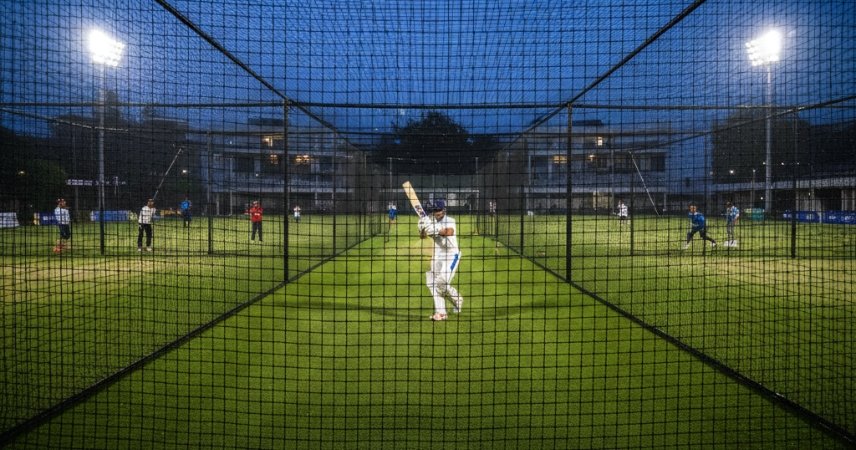
Cricket practice nets are the backbone of any serious cricket academy. They allow multiple players to train simultaneously in a controlled environment, maximizing safety and efficiency. Whether you are setting up a new academy in Visakhapatnam, Vijayawada, or upgrading an existing facility, professional net installation is crucial for player development and injury prevention. In this comprehensive guide, we cover everything from net types and materials to installation height and maintenance.
With cricket fever running high across Andhra Pradesh, academies are investing in high-quality training infrastructure. Properly installed practice nets not only contain the ball but also replicate match-like conditions, helping batsmen, bowlers, and fielders hone their skills safely.
A well-designed cricket net isn't just a cage; it's a training tool. The right tension, height, and material can significantly improve a player's confidence and technique.
R. Sharma, Head Coach & Installations Consultant
Key Benefits of Professional Cricket Practice Nets
Installing high-quality cricket nets offers multiple advantages for academies and training centers:
- Uninterrupted Training: Multiple players can practice in adjacent lanes without interfering with each other.
- Safety First: Prevents wild hits from injuring players, coaches, or passersby; contains the ball within the practice area.
- Durability: Professional-grade HDPE nets withstand thousands of ball impacts and harsh sunlight.
- Versatility: Suitable for fast bowlers, spinners, and batsmen; can accommodate bowling machines.
- Space Optimization: Maximizes the use of available ground space by creating multiple training lanes.
- Weather Resistance: Quality nets are UV stabilized and won't sag or degrade quickly in coastal climates.
Materials Used in Cricket Nets: HDPE vs Polyethylene
Selecting the right net material is critical for longevity and performance. Here's a detailed comparison for sports applications:
Sports Nets
cricket Nets
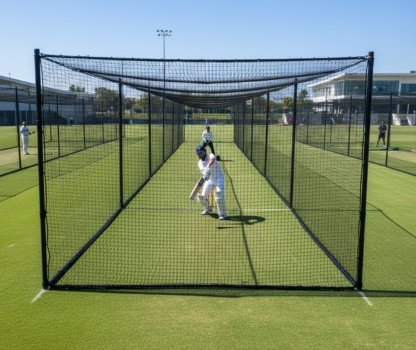
HDPE (High-Density Polyethylene) Monofilament Nets: These are the industry standard for modern cricket academies. HDPE nets offer exceptional UV resistance, do not absorb moisture, and have a "springy" quality that deadens the ball effectively. They are lightweight, have a lifespan of 7-10 years, and are available in green or black, which provides excellent visibility for players.
Nylon/Knotted Nets: Traditionally used, these nets have high tensile strength but degrade faster under direct sunlight. They can absorb moisture, leading to sagging and mildew. Nylon nets are generally less expensive initially but require replacement every 3-4 years, making them less cost-effective for academies in the long run.
At Sareena Safety Nets, we recommend UV-stabilized HDPE monofilament nets for cricket academies. They offer the perfect balance of impact resistance, weather durability, and minimal maintenance, especially for coastal cities like Visakhapatnam and Kakinada.
Professional Installation Process for Cricket Nets
Proper installation ensures safety and longevity. Here's our academy-grade installation process:
- Site Survey & Layout: We measure the ground dimensions, finalize the number of lanes (typically 3-5 lanes), and mark post positions.
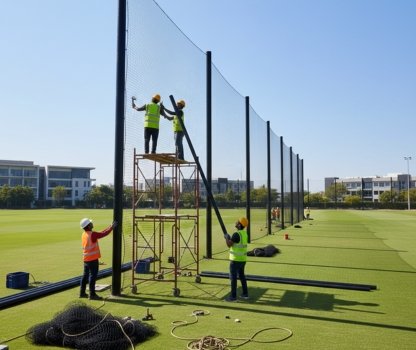
- Foundation & Post Erection: Heavy-duty galvanized iron pipes (2.5 to 3-inch diameter) are erected with concrete foundations to withstand high-impact forces.
- Top Frame & Cross Members: A robust top framework is installed to support the net and maintain height (usually 12-14 feet at the edges, 18-20 feet at the center for full toss clearance).
- Net Selection & Cutting: Based on lane dimensions, HDPE nets are cut with extra allowance for tensioning. Mesh size is typically 25mm to 30mm to contain the ball.
- Fixing with Galvanized Shackles & Ropes: The net is attached to the frame using UV-stabilized ropes and galvanized shackles at regular intervals for even tension.
- Overlap & Partition Netting: Side partitions are installed between lanes to prevent balls from crossing into adjacent nets. Front and back curtains are tensioned properly.
- Bowling Machine Area: If required, a separate reinforced pocket or area is created for bowling machine placement with easy access.
- Quality & Tension Check: We test the nets by hitting balls at various speeds to ensure no gaps or sagging. All anchor points are double-checked.
Critical Height & Dimension Considerations
For a professional academy experience, dimensions matter significantly:
- Minimum Lane Width: 3.5 meters (ideal 4 meters) to allow batsmen free movement.
- Lane Length: 20-22 meters from batting crease to bowling end.
- Net Height: Minimum 4 meters (13 feet) at the front, rising to 6-7 meters (20-22 feet) at the center to contain lofted shots and full tosses.
- Bowlers Run-up: Additional 8-10 meters behind the bowling crease if space permits, covered by netting.
- Backstop Net: A vertical back net behind the batsman to catch edges and deflections.
Cost Factors for Academy Installation
The investment in cricket practice nets varies based on several factors:
- Number of Lanes: More lanes increase material and labor costs but provide better training throughput.
- Frame Material: GI pipes with anti-corrosion coating cost more than mild steel but last longer, especially in coastal areas.
- Net Quality: Premium HDPE monofilament nets are higher in cost but offer superior durability and performance.
- Foundation Work: Soil condition and required concrete depth affect civil work costs.
- Accessories: Bowling machine pockets, turf quality (if provided), and lighting structures add to the total cost.
For a standard 3-lane cricket academy net in Andhra Pradesh, costs typically range from ₹2.5 lakh to ₹4.5 lakh, depending on specifications. At Sareena Safety Nets, we provide detailed quotations with a breakdown of frame, netting, and installation charges.
Maintenance Tips for Long Net Life
To ensure your cricket nets remain safe and functional for years:
- Regular Inspection: Check for cuts, abrasions, or loose shackles, especially after heavy practice sessions.
- Clean Debris: Remove leaves, dust, and other debris from the net mesh to prevent unnecessary weight and sagging.
- Retensioning: Over time, nets may stretch slightly; periodic retensioning keeps them taut and effective.
- UV Protection: Quality HDPE nets already have UV stabilizers, but avoid using sharp objects near the net.
- Monsoon Care: Ensure proper drainage around post foundations to prevent rust and corrosion.
Standards and Recommendations for Andhra Pradesh Academies
For cricket academies in Andhra Pradesh, especially those affiliated with district cricket associations, following standard specifications is essential. Nets should comply with BIS standards for tensile strength. Additionally, in cities like Vizag with high humidity and saline air, opting for galvanized frames and HDPE nets is strongly recommended to combat corrosion. Many academies now also include left-handers' lanes and adjustable net heights for varied practice.
Sareena Safety Nets has installed cricket practice nets for schools, residential complexes, and professional academies across the region. We ensure every installation meets the specific requirements of coaches and players.
Lakshman Rao
12 April, 2025 09:15amWe are planning to start a cricket academy in Vizianagaram. This guide is incredibly detailed! The point about HDPE nets for coastal areas is well taken. Could you also advise on the ideal gap between the net and the side poles to avoid injuries?
Vikram Rathod
14 April, 2025 06:30pmVery useful article. We recently installed nets at our school ground in Guntur. The maintenance tips about checking shackles and tension are practical. I would add that using rubber padding on the poles adds an extra layer of safety for fielders close to the nets.
Priya Singh
09 April, 2025 11:20amThank you for the clear breakdown of materials. We were confused between nylon and HDPE. The cost comparison over a 5-year period makes HDPE the clear winner. Looking forward to getting a quote for our academy in Visakhapatnam.
Leave a Reply
Your email address will not be published. Required fields are marked *