




 Material Guide
HDPE vs Nylon Safety Nets: Complete Material Comparison Guide
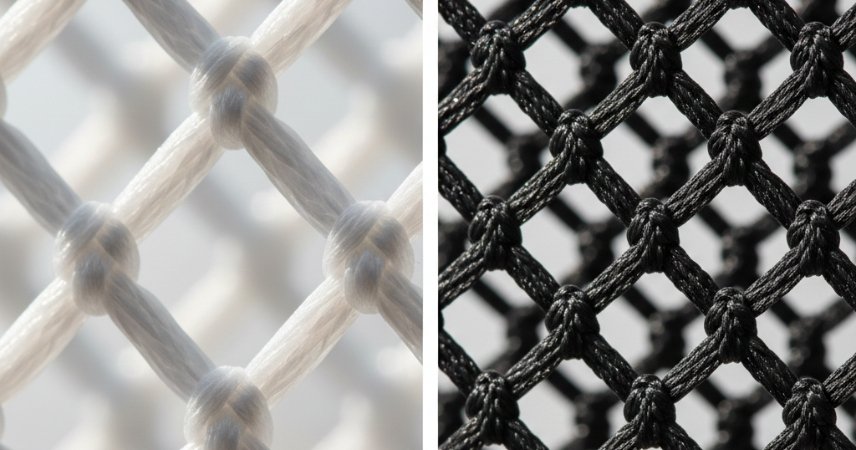
Choosing the right material for your safety nets is crucial for longevity, performance, and value for money. Whether you need balcony safety nets, pigeon nets, or sports nets, understanding the difference between HDPE and Nylon materials can save you from frequent replacements and disappointments. In Andhra Pradesh's diverse climate—from humid coastal regions like Visakhapatnam to drier inland areas—material selection becomes even more critical. This comprehensive guide compares HDPE (High-Density Polyethylene) and Nylon safety nets across all important parameters to help you make an informed decision.
Both materials are widely used in the safety net industry, but they have distinct characteristics that make them suitable for different applications. Let's dive deep into the science and practical aspects of these materials.
The biggest mistake homeowners make is choosing a net based only on price. Understanding material properties like UV resistance, water absorption, and tensile strength is essential for a net that lasts.
Dr. M. Reddy, Materials Engineer & Safety Consultant
Quick Overview: HDPE vs Nylon Safety Nets
Here's a quick comparison table to understand the fundamental differences:
| Property | HDPE (High-Density Polyethylene) | Nylon (Polyamide) |
|---|---|---|
| UV Resistance | ⭐⭐⭐⭐⭐ (Excellent with UV stabilizers) | ⭐⭐ (Poor - degrades quickly in sunlight) |
| Water Absorption | 0% (Does not absorb water) | 4-8% (Absorbs moisture, becomes heavy) |
| Tensile Strength | High (25-40 MPa) | Very High (70-90 MPa) |
| Weight | Lightweight | Heavier, especially when wet |
| Lifespan (Outdoor) | 5-8 years | 2-4 years |
| Cost | Moderate | Lower initial cost |
| Maintenance | Low (wipe clean) | High (needs protection from elements) |
| Flexibility | Good | Excellent |
| Chemical Resistance | Excellent | Good |
Detailed Analysis: HDPE Safety Nets
What is HDPE? High-Density Polyethylene is a thermoplastic polymer made from petroleum. It is known for its high strength-to-density ratio, making it ideal for outdoor applications. HDPE safety nets are manufactured by extruding the material into monofilaments or multifilaments, which are then knitted or woven into nets.
Advantages of HDPE Nets:
- Superior UV Resistance: HDPE nets are manufactured with UV stabilizers that protect them from sun damage. They can withstand years of direct sunlight without becoming brittle or losing strength.
- Zero Water Absorption: HDPE does not absorb water. This means the net won't become heavy during rain, won't sag, and won't develop mold or mildew—crucial for coastal cities like Visakhapatnam with high humidity.
- Excellent Weather Resistance: Performs well in all seasons—scorching summer, heavy monsoon, and cool winters.
- Lightweight: Easy to install and puts less stress on anchor points.
- Low Maintenance: Dust and pollutants don't stick easily. Occasional washing with water keeps it clean.
- Eco-Friendly: HDPE is recyclable and does not release toxic fumes when exposed to sunlight.
- Color Stability: Available in various colors (white, green, black) that don't fade quickly.
Disadvantages of HDPE Nets:
- Lower Tensile Strength than Nylon: While strong enough for most applications (balcony, pigeon, sports), HDPE has lower tensile strength compared to nylon.
- Less Elasticity: HDPE has lower stretch capacity, which can be a disadvantage in applications requiring high impact absorption.
- Higher Initial Cost: Quality HDPE nets with proper UV stabilizers cost more than basic nylon nets.
Detailed Analysis: Nylon Safety Nets
What is Nylon? Nylon (polyamide) is a synthetic polymer known for its exceptional strength and elasticity. It was one of the first synthetic fibers used for safety nets and is still popular in certain applications. Nylon nets are typically knitted or woven from multifilament yarns.
Advantages of Nylon Nets:
- Very High Tensile Strength: Nylon has excellent load-bearing capacity, making it suitable for heavy-duty industrial applications.
- Excellent Elasticity: Nylon can stretch significantly under load and recover, making it ideal for applications requiring impact absorption (e.g., rockfall nets, some sports nets).
- Abrasion Resistance: Nylon fibers have good resistance to wear and tear from friction.
- Lower Initial Cost: Basic nylon nets are often cheaper than HDPE nets, making them attractive for budget-conscious buyers.
- Flexibility: Easier to handle and tie due to its soft and flexible nature.
Disadvantages of Nylon Nets:
- Poor UV Resistance: This is the biggest drawback. Nylon degrades rapidly when exposed to sunlight. UV rays break down the polymer chains, making the net brittle and weak within 1-2 years. In sunny Andhra Pradesh, this is a major concern.
- Water Absorption: Nylon can absorb 4-8% of its weight in water. This causes the net to become heavy, sag, and promotes mold and mildew growth. In coastal humidity, this is a serious issue.
- High Maintenance: Requires protective coatings or regular replacement. Cannot be left exposed to elements without degradation.
- Shrinkage: Nylon can shrink when exposed to heat or moisture, affecting the fit and tension.
- Hydrolysis: In humid environments, nylon can undergo hydrolysis, where water molecules break down the polymer chains, leading to strength loss.
- Higher Long-Term Cost: Due to frequent replacement (every 2-4 years), the total cost of ownership often exceeds that of HDPE.
Application-Wise Comparison
Different applications have different material requirements. Here's which material suits which application:
Balcony Safety Nets:
Winner: HDPE - Balcony nets are exposed to direct sunlight and rain. HDPE's UV resistance and zero water absorption make it perfect. Nylon nets will sag and become brittle within 2 years.
Pigeon/Bird Protection Nets:
Winner: HDPE - These nets are typically installed on balconies, windows, and terraces with full sun exposure. HDPE's longevity makes it the clear choice. Nylon nets may need replacement every 1-2 years.
Cricket Practice Nets:
Winner: HDPE (for outdoor), Nylon (for indoor) - For outdoor cricket nets, HDPE's UV resistance is essential. For indoor academies where UV is not a factor, nylon's strength and elasticity can be beneficial.
Construction Safety Nets:
Winner: HDPE - Construction debris nets are exposed to sun and need to be lightweight. HDPE is the industry standard.
Industrial/Heavy-Duty Nets:
Winner: Nylon (for high-impact), HDPE (for outdoor storage) - For applications like rockfall protection or heavy cargo containment, nylon's strength is valuable. For outdoor storage yards with sun exposure, HDPE is better.
Swimming Pool Safety Nets:
Winner: HDPE - Pool nets need to resist chlorine, UV, and constant moisture. HDPE excels here while nylon degrades.
Which One Should You Choose for Andhra Pradesh?
Given Andhra Pradesh's climate—intense sun, coastal humidity in cities like Visakhapatnam, Kakinada, and Nellore, and heavy monsoon rains—HDPE is the clear winner for almost all outdoor applications. Here's why:
- Coastal Areas (Vizag, Bhimili, Kakinada, Machilipatnam): High humidity and salt air will cause nylon nets to degrade rapidly through UV damage and moisture absorption. HDPE's zero water absorption and UV resistance make it ideal.
- Inland Cities (Vijayawada, Guntur, Tirupati, Kurnool): Intense sunlight for most of the year will break down nylon quickly. HDPE's UV stabilizers ensure longevity.
- Heavy Rainfall Areas (Araku, Paderu): Nylon nets become heavy when wet, leading to sagging and stress on anchor points. HDPE remains lightweight.
When might Nylon be acceptable?
- Indoor applications with no sun exposure (e.g., indoor sports nets).
- Temporary installations where the net will be used for a short period (less than 2 years).
- Very tight budget where initial cost is the only consideration, and you're willing to replace frequently.
- Applications requiring high impact absorption where UV is not a factor.
How to Identify Quality HDPE Nets
Not all HDPE nets are created equal. Here's what to look for:
- UV Stabilization: Ensure the net is specifically labeled "UV stabilized." Cheap HDPE nets may lack proper UV inhibitors.
- Weight: Quality HDPE nets have consistent weight and thickness. For balcony nets, 120-150 GSM (grams per square meter) is standard.
- Mesh Size: For child safety, mesh size should not exceed 2 inches (50mm). Smaller mesh (1 inch or 25mm) is available for pigeon protection.
- Brand: Reputable manufacturers have consistent quality. At Sareena Safety Nets, we use only BIS-certified HDPE material.
- Color: Black and green HDPE nets typically have better UV resistance than white, though all colors can be UV stabilized.
At Sareena Safety Nets, we primarily use UV-stabilized HDPE monofilament nets for all our balcony, pigeon, and sports installations. We've found they offer the best performance, longevity, and customer satisfaction across Andhra Pradesh's varied climate zones.
Nagarjuna
07 May, 2025 11:30amThis is exactly what I was looking for! I installed nylon pigeon nets 2 years ago and they've become brittle and are tearing. Now I understand why. Going to replace with HDPE. The 10-year cost comparison is eye-opening.
Devi Prasad
09 May, 2025 04:15pmThanks for the detailed technical breakdown. We live in Vizag and our balcony nets face the sea. The humidity here is brutal. We switched from nylon to HDPE three years ago and the difference is remarkable. The HDPE nets still look almost new.
Sekhar
06 May, 2025 09:45amFor cricket practice nets in our academy (outdoor), which mesh size do you recommend in HDPE? We want to contain the ball but also have good visibility for the batsmen.
Leave a Reply
Your email address will not be published. Required fields are marked *