




 Home Safety
Invisible Grills vs Traditional Grills: Which One Should You Choose?
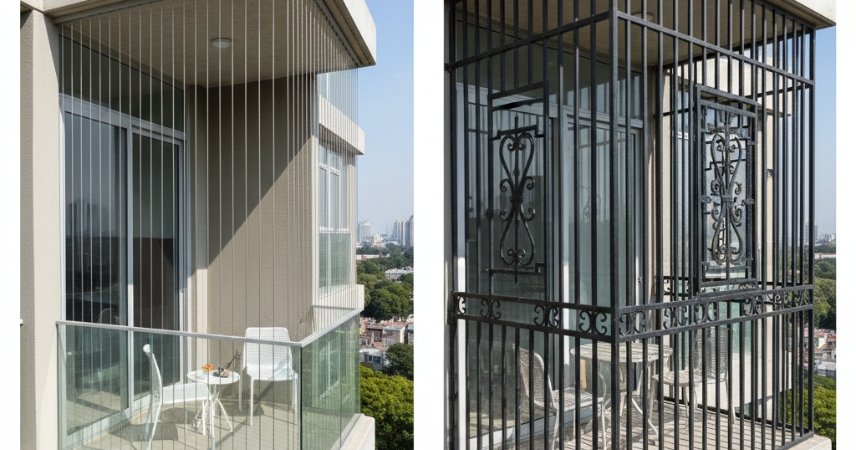
When it comes to securing balconies and windows, homeowners in Andhra Pradesh have two primary options: traditional iron grills and modern invisible grills. Both serve the fundamental purpose of safety, but they differ significantly in terms of aesthetics, durability, maintenance, and overall experience. With rising awareness about home design and safety, many families in Visakhapatnam, Vijayawada, and Tirupati are now weighing the pros and cons of each option. In this comprehensive comparison guide, we'll help you make an informed decision based on your specific needs, budget, and preferences.
Whether you're building a new home or renovating an existing one, choosing the right grill system is a long-term decision. Let's dive deep into the world of balcony and window grills and understand what suits you best.
The choice between invisible and traditional grills often comes down to what you value more: unobstructed views and modern aesthetics, or maximum physical strength and classic looks. Both have their place in today's homes.
P. Venkat, Design Consultant at Sareena Safety Nets
Quick Overview: Invisible Grills vs Traditional Grills
Before we dive into the details, here's a quick snapshot of the key differences:
| Feature | Invisible Grills | Traditional Grills |
|---|---|---|
| Material | Stainless steel cables with aluminum frame | Mild steel or iron bars |
| Aesthetics | Nearly invisible, unobstructed view | Visible bars, can look bulky |
| Safety Level | High (child safety, prevents falls) | Very High (strong physical barrier) |
| Anti-Corrosion | Excellent (SS 304/316) | Requires painting/coating |
| Maintenance | Minimal (wipe clean) | Regular painting to prevent rust |
| Ventilation | Excellent airflow | Good airflow |
| Installation Time | 1-2 days | 3-7 days (fabrication + installation) |
| Lifespan | 8-12 years (cables), frame lasts longer | 15-20 years with proper maintenance |
| Cost (per sq ft) | ₹180 - ₹280 | ₹120 - ₹200 (depends on design) |
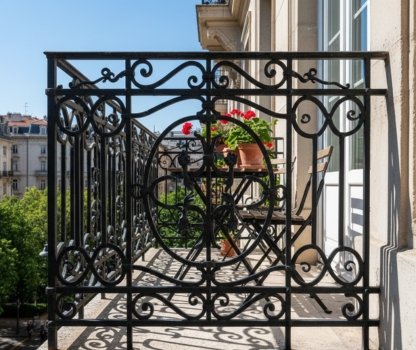
Traditional Grills
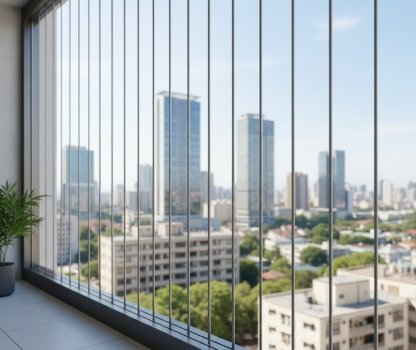
Invisible Grills
Detailed Comparison: Invisible Grills
What Are Invisible Grills? Invisible grills consist of thin stainless steel cables (typically 2-3mm thick) stretched tightly across an aluminum or SS frame. The cables are spaced 3-4 inches apart, creating a safety barrier that is barely visible from a distance, hence the name "invisible."
Advantages of Invisible Grills:
- Unobstructed View: The biggest advantage – you enjoy a clear, panoramic view from your balcony without visual barriers.
- Modern Aesthetics: Complements contemporary home designs and doesn't make your home look like a cage.
- Rust-Proof: Made of SS 304/316, ideal for coastal cities like Visakhapatnam where humidity and salt air cause rapid rusting of iron.
- Child & Pet Safe: Properly tensioned cables prevent children from slipping through (typical spacing 3-4 inches).
- Low Maintenance: No painting required. Just occasional wiping with a damp cloth.
- Quick Installation: No welding or fabrication on-site; installed within a day or two.
- Emergency Escape: In case of fire, the cables can be cut with a standard cutter for emergency exit (unlike iron grills that may require grinding).
Disadvantages of Invisible Grills:
- Lower Physical Strength: While strong, they cannot withstand the same level of brute force as thick iron bars.
- Not Suitable for Ground Floor Security: For anti-theft purposes on ground floors, traditional grills are more reliable.
- Cable Tension May Loosen: Over many years, cables may require retensioning.
- Higher Initial Cost: Per square foot cost is generally higher than basic traditional grills.
Detailed Comparison: Traditional Grills
What Are Traditional Grills? These are the classic iron or mild steel grills that have been used for decades. They consist of vertical and horizontal bars (typically 12mm to 16mm thick) welded together to form a rigid structure. They are usually painted with enamel or anti-rust coating.
Advantages of Traditional Grills:
- Maximum Strength: Thick iron bars provide immense physical strength and are virtually impossible to break through.
- High Security: Ideal for ground floors, rear windows, and areas requiring theft prevention.
- Custom Designs: Can be fabricated into various ornamental patterns and curves.
- Long Lifespan with Care: With regular painting, they can last 20+ years.
- Lower Initial Cost: Basic designs are often cheaper than invisible grills.
Disadvantages of Traditional Grills:
- Obstructed View: The bars block the view and can make spaces feel confined.
- Rust and Corrosion: In coastal Andhra Pradesh, iron grills require frequent painting (every 1-2 years) to prevent rust.
- High Maintenance: Scraping, priming, and painting is labor-intensive and messy.
- Aesthetic Limitations: Can make modern homes look dated or like "cages."
- Difficult Emergency Exit: In a fire, cutting through iron bars requires specialized equipment and time.
- Heavy and Bulky: Adds significant weight to the structure and looks imposing.
Which One Should You Choose?
Your choice depends on several factors:
Choose Invisible Grills If:
- You live in a high-rise apartment (above 3rd floor) and prioritize view and aesthetics.
- Your home is in a coastal area (like Vizag, Kakinada, Bhimili) where rust is a major concern.
- You want a modern, minimalist look for your balcony or windows.
- You have children or pets and want fall protection without blocking the view.
- You prefer low-maintenance solutions (no painting, scraping).
- Emergency exit possibility is important to you.
Choose Traditional Grills If:
- You are on the ground floor or first floor and need maximum security against theft.
- You prefer the classic look of iron grills and don't mind regular maintenance.
- You have a tight budget and cannot stretch to invisible grills.
- You want very thick bars for a sense of ultimate physical strength.
- Ornamental/designer patterns are important for your home's exterior.
Hybrid Approach: Best of Both Worlds
Many homeowners in Andhra Pradesh are now adopting a hybrid approach:
- Front Balcony: Invisible grills for view and aesthetics.
- Rear/Side Windows: Traditional grills for security.
- Lower Floors: Traditional grills or combination of both.
- Upper Floors: Invisible grills for unobstructed views.
This approach balances aesthetics, security, and budget effectively.
Installation Considerations in Andhra Pradesh
For invisible grills, ensure the installer uses high-quality SS 304 (or SS 316 for direct coastal exposure) cables and aluminum frames. Avoid cheap imitations that may rust or corrode. For traditional grills, ensure proper anti-rust primer and at least two coats of good enamel paint. In coastal areas, consider using stainless steel bars for traditional grills if budget permits, though that increases cost significantly.
At Sareena Safety Nets, we provide both options and help you choose based on your specific requirements. Our invisible grills use imported SS 304 cables with a 10-year warranty against rust, and our traditional grill partners use high-quality MS with proper coating.
Ramesh Babu
22 January, 2025 04:30pmExcellent comparison! We were confused about what to choose for our new flat in Vizag. The table really helped. We've decided to go with invisible grills for the front balcony to enjoy the sea view, and traditional for the back windows. Thank you!
Sunita Reddy
25 January, 2025 10:15amWe installed invisible grills last year in Vijayawada. One thing to add: make sure the installers use proper tensioning tools. Ours were a bit loose initially but they came and fixed it. Also, SS 304 is a must in this climate. Great article!
Suresh
21 January, 2025 09:45amI have traditional grills at home and the rust problem is real. Every monsoon I have to touch up paint. Thinking of replacing them with invisible grills but worried about security on ground floor. Any suggestions?
Leave a Reply
Your email address will not be published. Required fields are marked *